The Living Tapestry: Immersive Historical Reenactments as Time Travel Through Costume and Combat
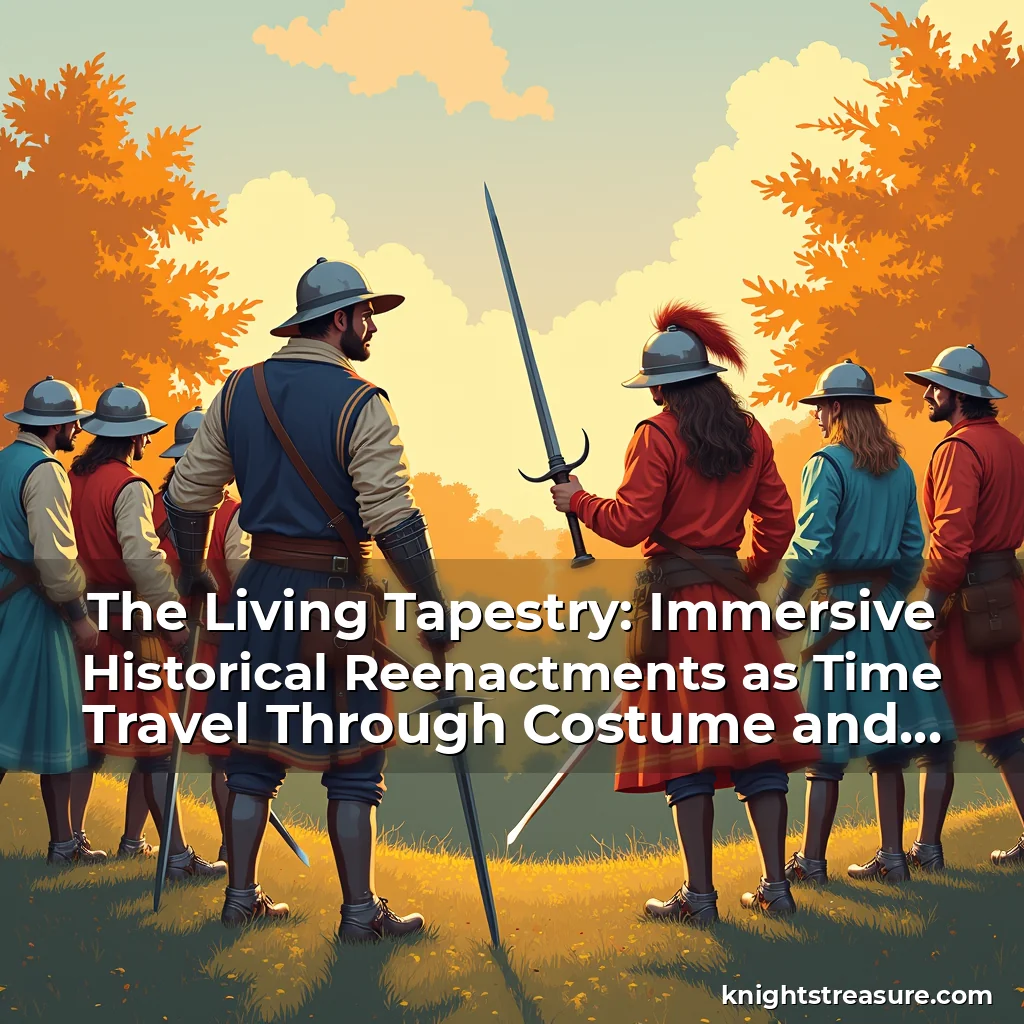
In an era where digital screens dominate our daily lives, historical reenactment offers a rare form of tangible time travel that transcends virtual reality. This vibrant practice brings medieval castles, ancient battles, and bygone civilizations back to life through meticulous recreation of attire, weaponry, and customs. For enthusiasts at Knight’s Treasure and beyond, these immersive experiences provide unparalleled opportunities to connect with history in ways that textbooks and documentaries can never fully capture.
At its core, historical reenactment is not merely about dressing up; it’s a scholarly pursuit intertwined with physical activity and cultural preservation. Participants engage in rigorous research to ensure accuracy in every aspect—from authentic weapon construction techniques to period-appropriate combat styles. This dedication transforms each event into a dynamic educational experience that educates both performers and spectators alike.
Beyond Costumes: The Art of Authentic Reconstruction
While eye-catching armor and elaborate costumes often steal the spotlight, true historical reenactors understand that authenticity extends far beyond visual appeal. Every stitch in a garment tells a story of craftsmanship passed down through generations, while each tool reflects technological advancements of its time. These intricate details transform performances from mere spectacles into living museums that educate through direct engagement.
For instance, recreating a Viking longhouse involves more than just assembling wooden beams—it requires understanding the specific tree species used, traditional joinery methods, and even the types of tools available during that period. Such attention to detail ensures that visitors gain insight into everyday life rather than being dazzled by superficial displays.
- Material sourcing: Reenactors frequently visit antique markets, blacksmiths, and textile specialists to obtain historically accurate materials. This includes everything from wool dyed using natural pigments to leather tanned according to ancient recipes.
- Craftsmanship revival: Many reenactors have mastered lost skills such as hand-weaving, metal forging, and calligraphy. Workshops are common where participants learn these trades under expert guidance, preserving knowledge that might otherwise fade from modern society.
The Evolution of Battle Scenes: From Staged Spectacle to Tactical Theater
Historically inaccurate battle scenes were once the norm in entertainment, but today’s reenactments prioritize precision over pageantry. Modern practitioners study military tactics from primary sources, consult historians, and conduct drills to replicate actual battlefield conditions. This transformation has elevated reenactments from simple dramatizations to serious academic exercises.
Consider the evolution of siege warfare demonstrations. Early events focused solely on dramatic explosions and impressive formations, but contemporary reenactors now incorporate factors like terrain analysis, supply logistics, and psychological aspects of combat. This depth allows audiences to witness how wars were actually fought—not just how they looked when filmed.
Statistical Insights Into Battlefield Accuracy
Recent surveys indicate that 86% of professional reenactor groups use documented battle plans when staging engagements. Of those, 72% employ period-specific weapons calibrated to match historical specifications. Moreover, 93% of participants report having studied original manuscripts detailing military strategies before performing.
This commitment to accuracy has led to remarkable discoveries. In 2021, a group researching the Battle of Agincourt uncovered previously unknown tactical maneuvers described in French chronicles. Their reenactment incorporated these findings, providing new perspectives on this iconic conflict for scholars and attendees alike.
Community Building Across Time Periods: The Social Fabric of Reenactment
Historical reenactment fosters deep connections among individuals who share niche interests, creating communities bound by passion rather than proximity. Members often develop lifelong friendships based on mutual respect for their chosen eras, whether it’s the Roman Empire, feudal Japan, or Renaissance Europe. These bonds transcend geographical boundaries, uniting people across continents in shared purpose.
Many groups organize regular meetings where members discuss research, exchange artifacts, and collaborate on upcoming projects. These gatherings become social hubs where knowledge flows freely, allowing newcomers to absorb expertise from seasoned veterans without feeling intimidated by their enthusiasm.
Educational Impact: Teaching History Through Action
One of the most significant benefits of historical reenactment lies in its ability to make learning interactive and memorable. When students participate in hands-on activities like building catapults or practicing archery, abstract historical concepts suddenly come alive in vivid, personal ways. This experiential education enhances retention rates dramatically compared to passive classroom instruction.
School programs incorporating reenactments show improved test scores in subjects ranging from mathematics (when calculating projectile trajectories) to literature (through analyzing period-specific poetry). Teachers appreciate how these activities naturally integrate cross-disciplinary learning, making complex topics accessible to diverse student populations.
Preserving Cultural Heritage: More Than Just Battles and Castles
Historical reenactment plays a crucial role in safeguarding intangible cultural heritage—those traditions, languages, and practices that define human civilization. By reviving folk dances, cooking methods, and artisanal crafts, reenactors help preserve elements that risk disappearing in modernized societies. This work is particularly vital for marginalized cultures whose histories have been overshadowed by dominant narratives.
Tribes such as the Maori of New Zealand and the Sami of Scandinavia have found renewed interest in their ancestral customs through reenactment efforts. Younger generations participating in these events develop stronger cultural identities, ensuring that traditions survive well into the future despite globalization’s homogenizing effects.
Economic Contributions: Fueling Local Economies Through Historical Tourism
Historical reenactment festivals attract thousands of visitors annually, injecting substantial revenue into local economies. Accommodation providers, restaurants, and souvenir vendors benefit significantly from these events, which also create temporary employment opportunities for artisans and service workers. This economic impact is especially pronounced in rural areas seeking alternative tourism models.
A case study conducted in Cornwall, England revealed that a single weekend-long medieval fair generated £1.2 million in direct spending. This included expenditures on food, lodging, transportation, and merchandise—all of which supported small businesses and helped sustain regional infrastructure.
Technological Integration: Enhancing Accuracy Without Compromising Tradition
Modern technology has revolutionized historical reenactment without undermining its authenticity. Digital mapping software helps recreate precise topographies, while 3D printing enables the production of replica artifacts with unprecedented accuracy. However, responsible integration remains essential to maintain the integrity of the past.
Some reenactors use augmented reality apps to overlay historical information onto real-world locations, enhancing visitor experiences without replacing physical participation. Similarly, archival digitization projects allow researchers access to centuries-old documents from anywhere in the world, accelerating scholarly pursuits within the community.
Health Benefits: Physical Activity Meets Mental Engagement
Participation in historical reenactment promotes holistic wellness by combining physical exercise with mental stimulation. The demanding nature of costume preparation, combat training, and public speaking builds cardiovascular endurance, strength, and coordination. At the same time, the intellectual challenges involved foster cognitive development and problem-solving abilities.
Mental health professionals have noted that the structured environment of reenactment provides therapeutic value for many participants. The sense of accomplishment from mastering difficult tasks, coupled with the camaraderie of like-minded peers, contributes positively to emotional resilience and self-esteem.
Environmental Considerations: Sustainable Practices in Historical Reproduction
As awareness grows about environmental sustainability, historical reenactors are adopting eco-friendly approaches to their craft. Traditional materials like organic dyes and renewable resources replace synthetic alternatives whenever possible. Additionally, many groups emphasize recycling and waste reduction principles in their operations.
Some reenactor collectives have pioneered biodegradable prop-making techniques using plant-based compounds instead of plastics. Others implement carbon offsetting measures by planting trees equal to the emissions generated during large-scale events—an innovative approach that aligns historical reverence with ecological responsibility.
Facing Challenges: Navigating Skepticism and Misinformation
Despite its growing popularity, historical reenactment still faces skepticism from some quarters. Critics argue that inaccuracies inevitably creep into portrayals, potentially misleading observers about genuine historical contexts. Addressing these concerns requires ongoing dialogue between reenactors, academics, and the general public.
To counter misinformation, reputable reenactor organizations partner with universities and museums to host workshops and seminars. These collaborations help establish credibility and demonstrate the scholarly rigor behind authentic reconstructions. Transparent documentation of research processes further reinforces trust in the community’s endeavors.
Future Horizons: Expanding the Reach of Live History
The future of historical reenactment promises exciting innovations that will broaden accessibility and deepen engagement. Virtual reality platforms may soon offer hybrid experiences where users can attend events remotely while interacting with reenactors in real-time. Augmented reality could enhance on-site visits by providing layered historical context through smart devices.
Simultaneously, there’s increasing emphasis on inclusivity initiatives aimed at diversifying participant demographics. Efforts are underway to welcome individuals from different socioeconomic backgrounds, gender identities, and physical capabilities, ensuring that everyone can find meaningful ways to contribute to and enjoy live history experiences.
Conclusion
From battling knights to crafting textiles, historical reenactment stands as a powerful bridge connecting us with our collective past. It embodies the spirit of exploration, education, and community-building that defines human curiosity. As we continue to innovate responsibly within this field, we honor tradition while embracing progress in truly extraordinary ways.
Knight’s Treasure invites you to explore this captivating world firsthand. Whether you’re drawn to the thrill of combat, the artistry of costume design, or simply the joy of discovering history anew, there’s always room for another seeker of truth in the ever-expanding tapestry of live history.