
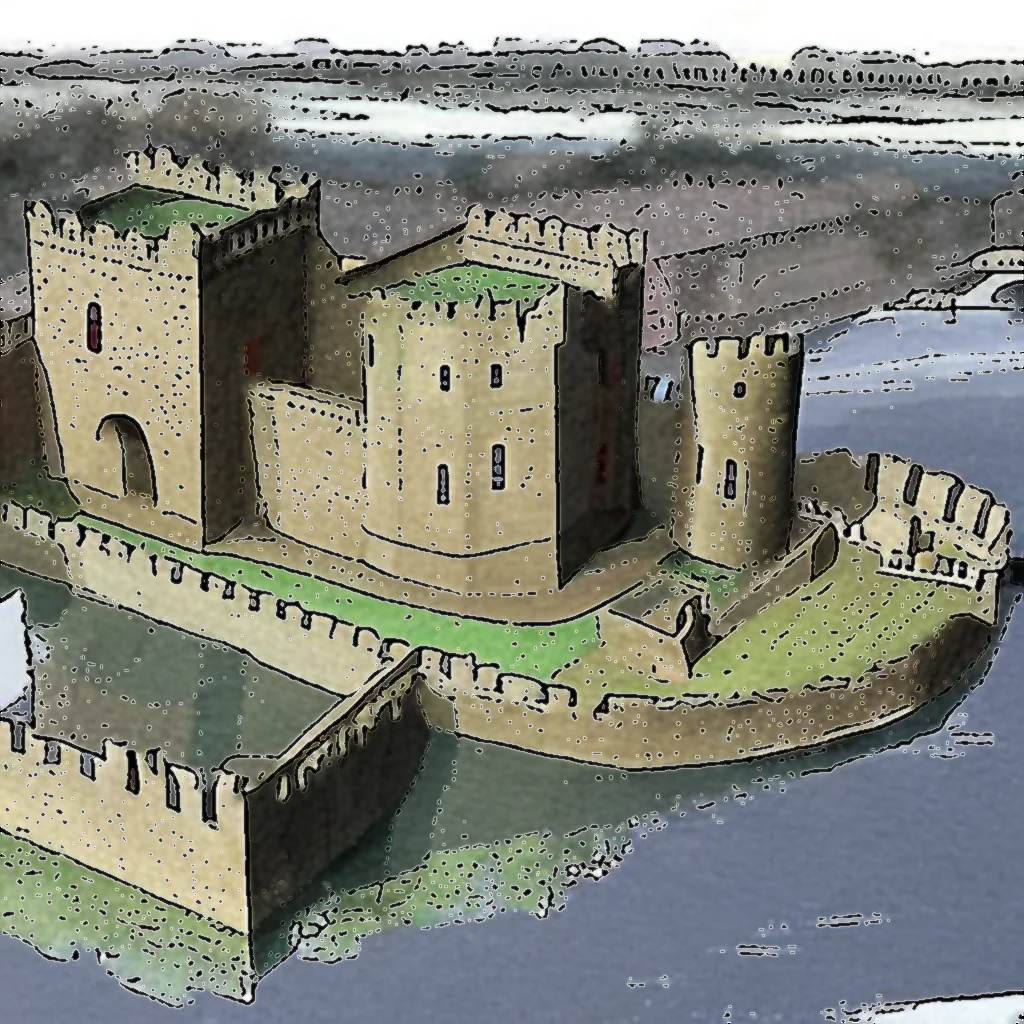
The discovery of these remains has prompted a reassessment of the castle’s history and its relationship with the surrounding landscape. It has also raised questions about the castle’s original purpose and its role in the wider context of the 18th century. The castle’s history is intertwined with the rise and fall of the coal industry in Nottinghamshire. The coal industry played a significant role in shaping the landscape and economy of Nottinghamshire, and the castle’s location on the River Trent, with its proximity to coal mines, made it a strategic location for the management of coal transportation and trade.
The trench revealed a wealth of information about the castle’s history, including the presence of a Roman road, a medieval village, and evidence of a 16th-century manor house. The discoveries were made during a dig that took place in January and February of 2023. The dig was conducted by archaeologists from the Newark & Sherwood District Council, and it was focused on the area surrounding the castle’s gateway. A 22-meter long trench was dug, and the excavation revealed a wealth of information about the castle’s history. The findings included a Roman road, a medieval village, and evidence of a 16th-century manor house.
* Historic England has proposed a plan to restore the historic castle, which includes a new visitor center and a museum. * The plan has been met with mixed reactions, with some people supporting it and others opposing it. * The plan is expected to cost around £10 million. * Historic England believes the restoration will be beneficial for the castle and the surrounding area.

news is a contributor at KnightsTreasure. We are committed to providing well-researched, accurate, and valuable content to our readers.